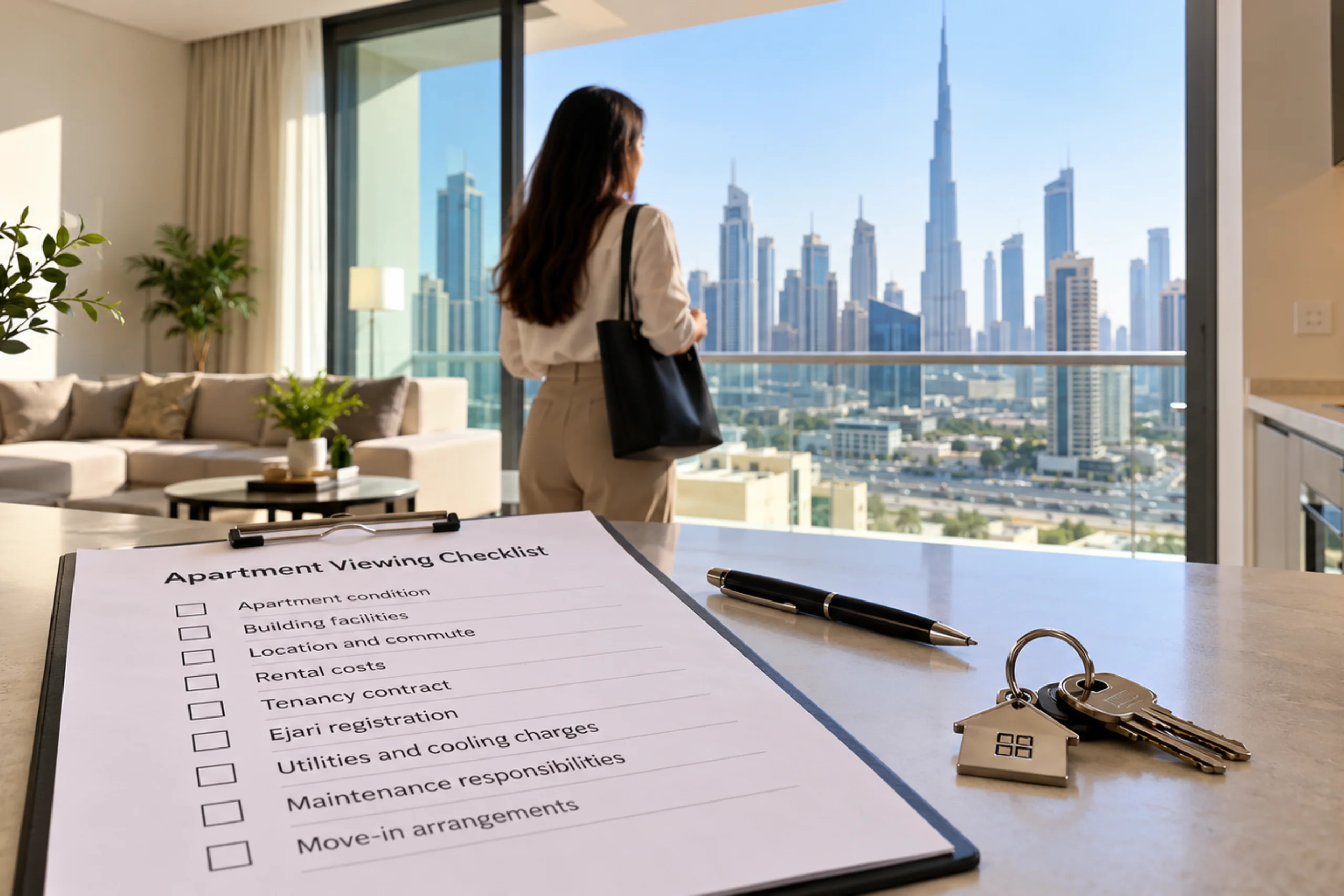


Renting an apartment in Dubai is an exciting step, whether you’re moving to the city for the first time or looking for a new place to call home. But before you sign a tenancy contract, it’s worth taking a closer look at the property, the costs and the terms of your rental agreement.
The apartment may look perfect in the listing, but what about the building facilities, maintenance responsibilities, or additional charges? Checking these details before committing can help you avoid unexpected expenses and make a more confident decision.
In this guide, we’ll walk you through what to check before renting an apartment in Dubai, from inspecting the property to understanding your tenancy contract.
1. Set Your Rental Budget
Before you start viewing apartments, work out how much you can comfortably spend on rent and other housing costs.
The advertised rent is only one part of your budget. Depending on your rental arrangement, you may also need to account for:
Security deposit
Real estate agency fees
Ejari registration fees
DEWA connection and utility costs
Chiller or cooling charges
Moving expenses
Parking fees, where applicable
Ask which costs are included in the rent and which you must pay separately. This makes it easier to compare apartments fairly instead of choosing one based only on its advertised price.
You should also confirm the rent payment terms. Find out how many cheques the landlord accepts and whether the payment schedule works for your budget.
2. Choose the Right Location
A good apartment should fit your daily routine, not just your budget.
Before choosing a neighbourhood, think about where you work, how you travel and which facilities you use regularly.
Check the following:
Distance to your workplace
Access to Metro stations and bus routes
Nearby supermarkets and pharmacies
Schools and nurseries, if needed
Access to major roads
Restaurants, parks and other amenities
Traffic during your usual commuting hours
If you drive, check the route during peak hours rather than relying only on the distance shown on a map. If you use public transport, check how long it takes to walk to the nearest station or bus stop.
You can also explore our guide to the best areas to live in Dubai to compare neighbourhoods based on your lifestyle and priorities.
3. Inspect the Apartment Before You Commit
Never rely on photographs alone when choosing a rental home. Arrange a viewing and take time to inspect the property properly.
Even an attractive apartment can have problems that aren’t obvious in the listing.
Check the apartment’s condition
During your viewing, check:
Walls and ceilings for damp patches, mould or water damage
Taps, showers and toilets for leaks or drainage problems
Lights, switches and electrical fittings
Air conditioning and ventilation
Windows, doors and locks
Kitchen cupboards and storage
Tiles, flooring and bathroom fittings
Appliances included with the apartment
If you notice damage or something that needs repair, ask who will address it and when. Get important commitments confirmed in writing before moving forward.
Check natural light, noise and privacy
Take a moment to look beyond the fixtures.
Does the apartment get enough natural light? Can you hear traffic or noise from neighbouring units? Do nearby buildings overlook your windows?
If possible, visit at a time when you can get a realistic feel for the surrounding environment. These small details can affect your comfort every day.
4. Check the Building and Its Facilities
The apartment is only part of your rental experience. The building itself matters, too.
During your visit, look at the shared spaces and ask about the facilities you expect to use.
Elevators: Are they clean and working properly?
Parking: Is a parking space included, and is it assigned to your apartment?
Security: What access controls or security arrangements are available?
Gym and swimming pool: Are these facilities available to residents, and do any additional charges apply?
Common areas: Are entrances, corridors and lifts well maintained?
Maintenance: Who handles problems with shared facilities?
If you are renting in a building with shared amenities, ask whether any planned maintenance or restrictions could affect your use of them.
5. Read Your Tenancy Contract Carefully
Your tenancy contract sets out the terms of your rental arrangement. Read it carefully before signing and make sure you understand your responsibilities as well as the landlord’s.
Pay particular attention to:
Agreed annual rent
Tenancy start and end dates
Rent payment schedule
Security deposit and its return conditions
Maintenance responsibilities
Additional charges
Renewal terms and notice requirements
Early termination conditions
Rules about alterations to the property
Make sure the contract reflects what you agreed with the landlord or agent. If anything is unclear, ask for clarification before signing.
You should also verify that the person offering the property has the authority to rent it out and that the necessary tenancy documentation is in order.
6. Understand Ejari Registration
If you’re renting a property in Dubai, Ejari registration is an important part of the tenancy process.
Ejari is Dubai’s system for registering tenancy contracts. Before moving forward, ask how the registration will be handled and which documents you need to provide.
Confirm:
Who will arrange the registration
Which documents are required
Whether registration fees apply
When the registration will be completed
Don’t assume the contract has been registered simply because it has been signed. Confirm the arrangements with the landlord or agent and keep copies of your tenancy documents.
7. Ask About DEWA, Cooling and Other Charges
Utility costs can affect your overall rental budget, so find out how they work before committing to an apartment.
Electricity and water are commonly handled through DEWA in Dubai, while cooling arrangements can vary between properties and buildings.
Before signing, ask:
Do I need to open a DEWA account?
Does the building use district cooling?
Are cooling charges included in the rent?
Are there separate cooling or consumption charges?
Are internet services already connected?
Are there any outstanding utility balances that need to be resolved before move-in?
These questions are especially useful when comparing two apartments with similar rents. One may come with additional costs that make it more expensive overall.
8. Clarify Maintenance Responsibilities
Every rental property will need maintenance from time to time. Before signing, understand who handles repairs and how requests should be reported.
Ask about the process for dealing with:
Air conditioning problems
Plumbing leaks
Electrical faults
Appliance repairs
General wear and tear
Emergency maintenance
Your tenancy contract should explain the agreed responsibilities. Don’t assume every repair automatically falls to the landlord or tenant.
If the apartment already has damage, document it before moving in. This gives both parties a record of the property’s condition at the start of the tenancy.
9. Document the Property’s Condition Before Moving In
Once you’ve chosen an apartment, record its condition before bringing in your belongings.
This is particularly important for furnished properties, where you may need to return furniture and appliances in the agreed condition.
Before moving in:
Photograph existing damage and marks
Check furniture and appliances
Test keys, locks and access cards
Note any missing items
Keep a copy of the inventory, if provided
Report existing problems to the landlord or agent in writing
Keep these records with your tenancy documents. They can help avoid disagreements when you leave the property and the security deposit is reviewed.
10. Confirm the Move-In Arrangements
Even after signing the contract, there are a few practical details to sort out before moving day.
Confirm when you can collect the keys, whether any agreed repairs must be completed first and what access arrangements you need to follow.
You should also check whether the building requires advance notice for movers or has specific moving hours.
Before moving in, make sure you know:
When the apartment will be handed over
Whether the property will be cleaned
Whether agreed repairs are complete
How to access the building and parking
Whether you need access cards or additional keys
How to report maintenance problems after moving in
Sorting these details out early can make the move much less stressful.
Apartment Rental Checklist: What to Confirm Before You Sign
Use this checklist when viewing an apartment or comparing different rental options.
Item to Check | Details |
|---|---|
Rental budget | Confirm the rent and any additional costs. |
Location | Check the area and daily commute. |
Apartment condition | Inspect the apartment and test fixtures. |
Building facilities | Review available facilities and parking. |
Tenancy contract | Read the contract carefully before signing. |
Ejari | Confirm the registration arrangements. |
Utilities | Understand DEWA and cooling charges. |
Maintenance | Clarify who is responsible for repairs. |
Property condition | Photograph existing damage and check the inventory. |
Move-in arrangements | Confirm the move-in date and handover details. |
Find an Apartment to Rent in Dubai With Home Deals Real Estate
Choosing a rental home involves more than finding a property within your budget. You also need to consider the location, building, tenancy terms and whether the apartment suits your everyday needs.
At Home Deals Real Estate, we help renters explore rental options in Dubai and Sharjah. Our team can help you enquire about available properties and arrange viewings for suitable options.
Whether you’re moving to Dubai for the first time or looking for a different apartment, start by telling us what you need.
Looking for an Apartment to Rent in Dubai?
Share your preferred area, budget, and property requirements with our team.